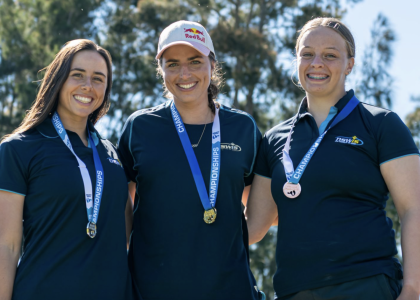

The International Canoe Federation continued its Sustainability and the Future of Paddle Sport Webinar series by spotlighting the significant sustainability achievements of the ICF Slalom World Championships Sydney 2025.
Delivered by Paddle Australia and endorsed by the ICF, the initiative aimed to take meaningful action on climate change, demonstrate sustainability in practice, and leave a positive legacy for the venue, people, and the planet.
It also sought to educate and inspire stakeholders in the lead-up to the Olympic Games Brisbane 2032.
The third instalment of the webinar series took place April 24 and was hosted by ICF Vice President Dr. Cecilia L. Farias.
The session featured Stephanie Lebeau, Sustainability Lead for the ICF Slalom World Championships Sydney 2025, as the keynote speaker, with moderation by Matthew Campelli, Managing Director of Touchline Earth.
Opening the session, Dr. Farias emphasised the growing importance of sustainability in paddle sport.
“Sustainability is now part of how we define success in paddle sport - not just what happens on the water, but the impact we leave behind.”
“Through this webinar series, the International Canoe Federation is committed to turning ambition into action. What we saw in Sydney is a clear example that sustainability is no longer an aspiration for our sport- it is an expectation, and one we are ready to meet.”
“As we look ahead to Brisbane 2032 Olympic Games, initiatives like those in Sydney help build the foundation for a more responsible and resilient future for paddle sport.”
“One of the most powerful legacies of this work is its ability to inspire and educate. By engaging participants and spectators, we are helping to build awareness that extends far.”
Key speaker Stephanie Lebeau began the webinar by highlighting how sustainability was embedded across every aspect of the ICF Slalom World Championships in Sydney 2025, setting the tone for a holistic and integrated approach.
From the outset, transport strategies promoted low-impact travel, with shuttle systems and clear signage making sustainable choices easy for attendees.
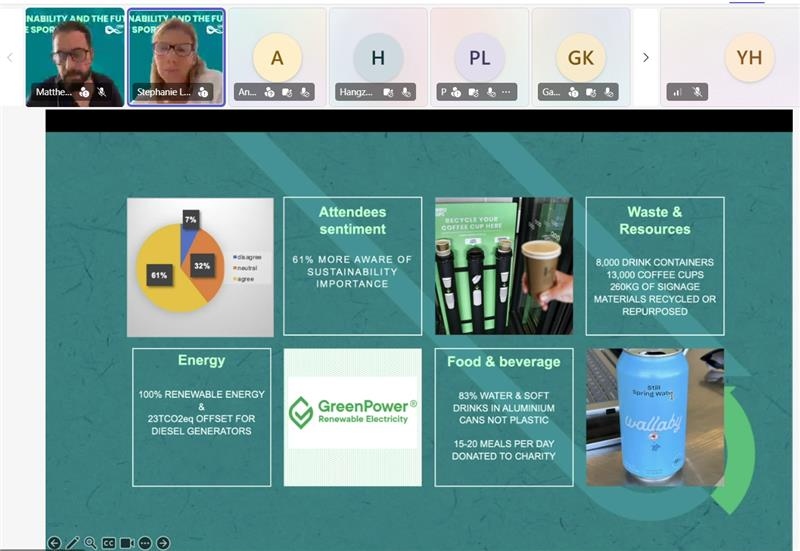
The event was powered entirely by renewable electricity, supported by ongoing carbon offset initiatives. Sustainability was also embedded operationally, with waste systems including recycling, composting, and clearly labelled disposal points.
Water refill stations reduced single-use plastics, while recyclable coffee cups, reusable materials, and a shift to aluminium cans for most beverages further minimised waste.
Education and engagement were equally important, with interactive activations and information hubs encouraging participation from athletes and spectators. This approach proved effective, with most attendees recognising sustainability as a key priority.
This approach resonated strongly, with a majority of attendees recognising sustainability as a key priority.
“The most meaningful impact wasn’t just in the data, but in the people,” said Lebeau.
“Athletes appreciated the efforts, volunteers felt empowered, venue staff gained new skills, partners leaned in, and Paddle Australia staff stepped into genuine sustainability leadership.”
The results were tangible. Thousands of drink containers and coffee cups were successfully recycled or repurposed, significant volumes of signage materials were reused, and nearly three quarters of all waste was diverted from landfill.
In addition, surplus food was redirected daily to support local charities – ensuring the event’s impact extended beyond the competition itself.
“That’s the cultural shift this event made possible – and the kind of transformation sustainability can create,” said Lebeau.
“The Slalom World Championships Sydney 2025 showed that when sustainability is embedded from the start, it doesn’t limit what we can achieve – it elevates it.”
One more Sustainability and the Future of Paddle Sport webinar is scheduled for 2026, with details to be confirmed soon.
Related links