
Four-time Olympian Sebastian Cuattrin has etched his name in the world record books – and he is already setting his sights on another extraordinary challenge.
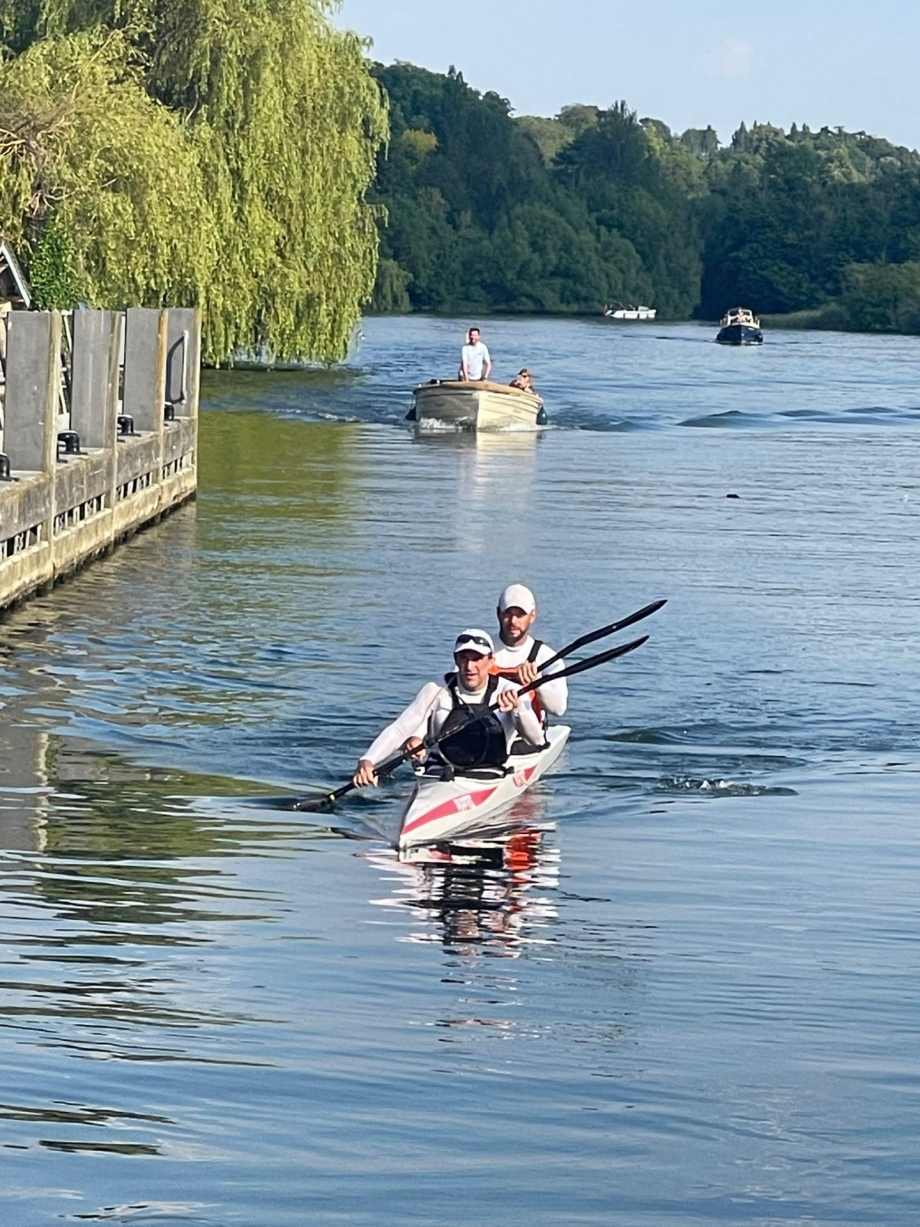
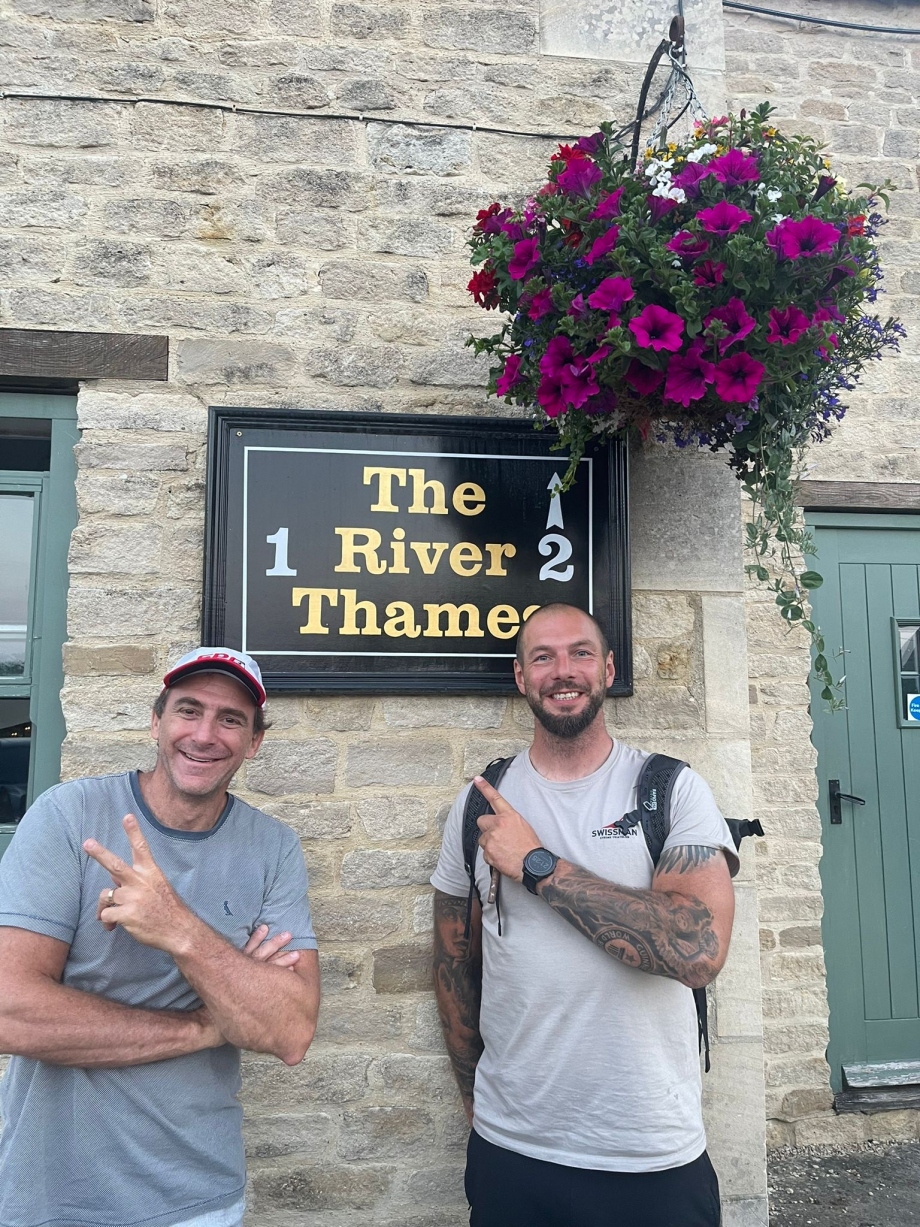
Cuattrin and fellow Brazilian paddler Sebastian Szubski have been named in the Guinness World Records for registering the fastest time to paddle the length of the River Thames in the United Kingdom in a kayak double.
The 198.5-kilometre stretch saw Cuattrin and Szubski kayak from Lechlade in Gloucestershire to Teddington Lock in London, paddling through 22 locks and running and carrying for the other 22 in their epic mission.
They finished the route in a time of 21 hours and 57 minutes, smashing the previous record by two hours and 15 minutes.
After completing the challenge in June 2024, Cuattrin and Szubski were recently informed that they have secured their place in the Guinness World Records.
“Becoming world record holders was a great joy, as we had been paddling together for many years on the Brazilian canoeing team and had even competed in the Athens Olympics in the K2 event,” said Cuattrin.
“For me, this record represents a great achievement and a personal victory.
“Achieving this dream in partnership with Sebastián Szubski was very special.”
Cuattrin made his Olympic debut as an 18-year-old at Barcelona 1992, and went on to represent Brazil at the 1996, 2000 and 2004 editions of the Games.
At the Pan American Games, he won 11 medals, including gold as part of the men’s K4 team in Rio in 2007.
Cuattrin said being named in the Guinness World Records is “one of the most important achievements of my career”.
“This certificate will be proudly displayed in my trophy room, in a prominent place alongside my most cherished medals,” said Cuattrin.
“It is a milestone in my life and immortalises a moment of great challenge and teamwork.
“I decided to accept the invitation to take on this challenge after paddling 50 km in 15 hours non-stop on Lake Lausanne as a way to prove to myself that I was still able to do this kind of thing when I turned 50.
“I took on this challenge without any outside help or support and realized that I was capable of doing something even more difficult, like trying to break a Guinness World Record.
“I would like to pay a special thank you to my wife Regina, all the support crew and Plastex for supporting the challenge by allowing us to borrow the K2.”
Cuattrin, who is the International Canoe Federation’s Development Manager and Flatwater Technical Advisor, said the most challenging part of the world record attempt was paddling at night.
“We took lighting systems that became ineffective because of the reflection of light on the boat and the oars, which prevented us from seeing the river and the path we should follow,” said Cuattrin.
“This forced us to turn everything off and paddle, guided only by the difference in colour between the sky and the trees on the riverbank.
“In addition, during the night, we got caught in a fishing line, which made this part of the journey even more complicated.
“Most of the time, we were guided by the glow of the stars reflected in the water.
“Despite the challenge of paddling in these conditions, it was a very special moment, as it allowed us to put all our experience and navigation knowledge into action to continue heading towards our goal.”
After achieving a Guinness World Record, Cuattrin could be forgiven for taking it easy but he is now plotting his next big challenge.
“Soon, I plan to paddle more than 1,800 km in less than 15 days, which will require more time to complete the challenge,” added Cuattrin.
“It will be a very difficult journey, not only because of the enormous number of kilometres I will have to cover each day, but also because of the weather conditions, the geography, and the places I will pass through in order to try to cover the entire route in the shortest time possible.
“In addition, I will have to reconcile this challenge with my schedule and work at ICF, which makes the goal even more complicated and fascinating at the same time.”
Related links