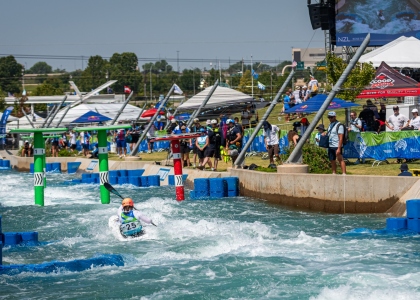

Each winter, as Europe slows down for the season and the southern hemisphere heats up, Canoe Slalom paddlers pack up their boats and book their flights abroad.
Some migrate south, chasing sun and reliable water to lay the season’s foundations stroke by stroke. Others stay, embracing Europe’s cold mornings, believing resilience is built in tougher conditions.
The off-season isn’t escape – it's intention. A time for rebuilding, refining, and quietly sharpening race instinct before the summer spotlight returns.
Burgess buys into the French system
Adam Burgess has opted to stay closer to home this winter, shipping out to Les Roches, France, after being invited by Canoe Kayak Club de Quimperlé.
The British paddler said the decision was less about climate and more about culture.
“The French system is so strong, so spending time here is so valuable,” said Burgess.
“It really didn’t disappoint! I’m really enjoying paddling on this course and being in a natural environment, I’m not ashamed to admit that I felt some fear for the first few runs down.”
France’s depth in Canoe Slalom offers a different kind of advantage. Sessions are competitive. Standards are relentlessly high. Learning is constant. By embedding himself in that environment, Burgess is choosing immersion over comfort, leaning into Europe’s winter to sharpen his competitive instincts.
As the season approaches, his focus will shift south to La Seu d’Urgell for the Pyrenees Cup – a key benchmark event and an opportunity to press his case for national selection.

Llorente finds rhythm in Reunion
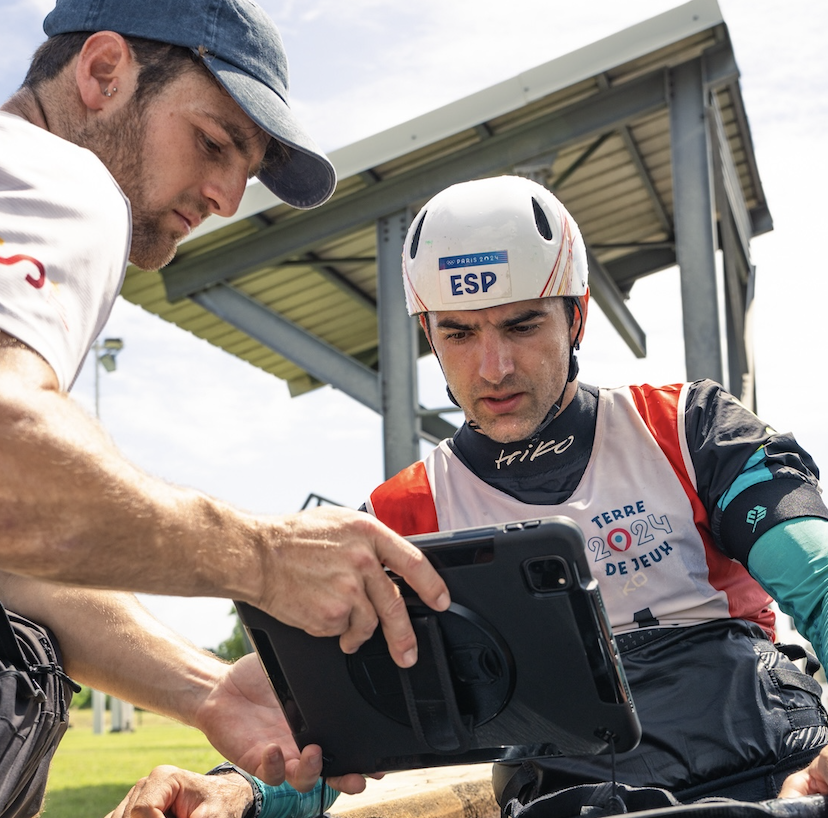
For Spain’s David Llorente, winter has meant heading in the opposite direction; trading the rivers of northern Madrid for the clear blue waters of Reunion.
The French Island, located east of Madagascar in the Indian Ocean, offers what much of Europe cannot in January: warmth, reliability, and uninterrupted time on the water.
“Training in better weather allows us to maintain higher quality sessions and be more consistent in our preparation,” said the reigning world champion in the men’s kayak cross individual.
“Reunion offers great facilities and reliable whitewater conditions, which makes it an ideal training base for us.”
With spring now returning to Europe, Llorente and his teammates, including Miquel Trave, have re-established themselves at La Seu, with a short training camp planned in Pau before attention turns to July’s International Canoe Federation Canoe Slalom World Championships in Oklahoma City.
Reunion, meanwhile, continue to strengthen its position on the global paddle sport calendar and will later host the final ICF Canoe Ocean Racing World Cup of the season, further cementing its reputation as a high-performance hub.
The Hocevars head South
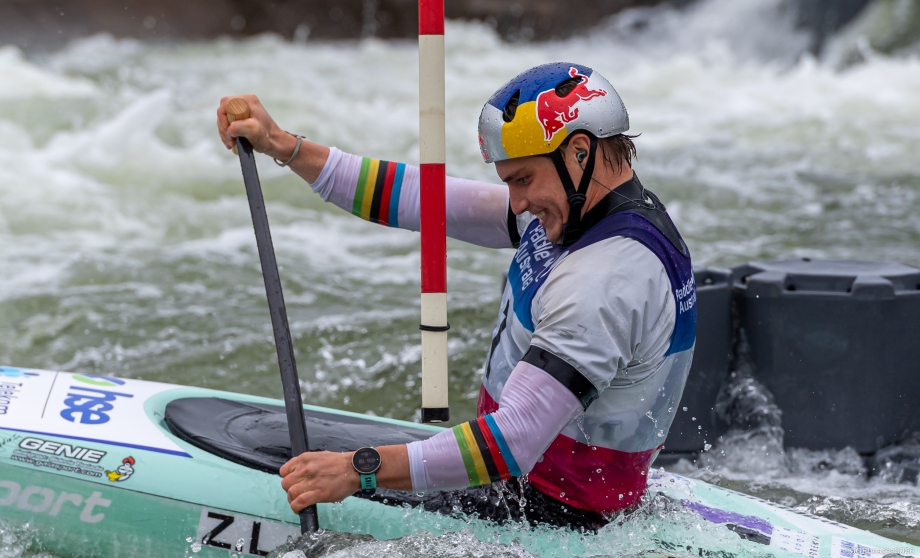
Slovenian siblings Eva Alina Hocevar and Ziga Lin Hocevar have also sought warmer waters, opting for Australia during Europe’s coldest months. For them, the reasoning was straightforward.
“If we want to be competitive, we have to travel to warmer places at the beginning of the year,” said Eva Alina Hocevar.
“We decided on Australia because the conditions are perfect. The course is excellent, and the temperatures are much better here than in Europe.”
Once their Australia trip concludes, the pair will return home to Tacen before travelling to Oklahoma City in March.
The off-season has become a study in strategy. Some athletes seek intensity within Europe’s established systems. Others chase climate and consistency across hemispheres.
Location, it seems, is no longer incidental. It is a calculated choice, one that may shape the margins of success when summer racing begins.
Related links: