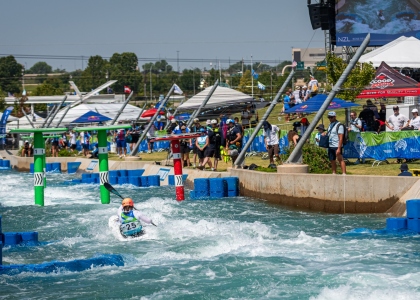

Woven into the fabric of Augsburg lies the Eiskanal, the world's first artificial whitewater course and the venue where Canoe Slalom made its Olympic debut.
For more than 55 years, the Eiskanal has stood at the intersection of history and modernity.
Generations of Olympians and world champions have tested themselves against its rapids, each leaving their mark on the course.
Yet, amid the constant passage of athletes and eras, the Eiskanal itself remains unchanged, a timeless stage for one of the sport's most demanding disciplines.
Kanu Schwaben Augsburg President Hans-Peter Pleitner recognises the consistency he has seen over his 15 years in charge.
“Nothing has really changed in Augsburg. My view is that the Augsburg Eiskanal is like Kitzbuhel in Alpine skiing or Wimbledon for tennis, you won’t change anything,” said Pleitner.
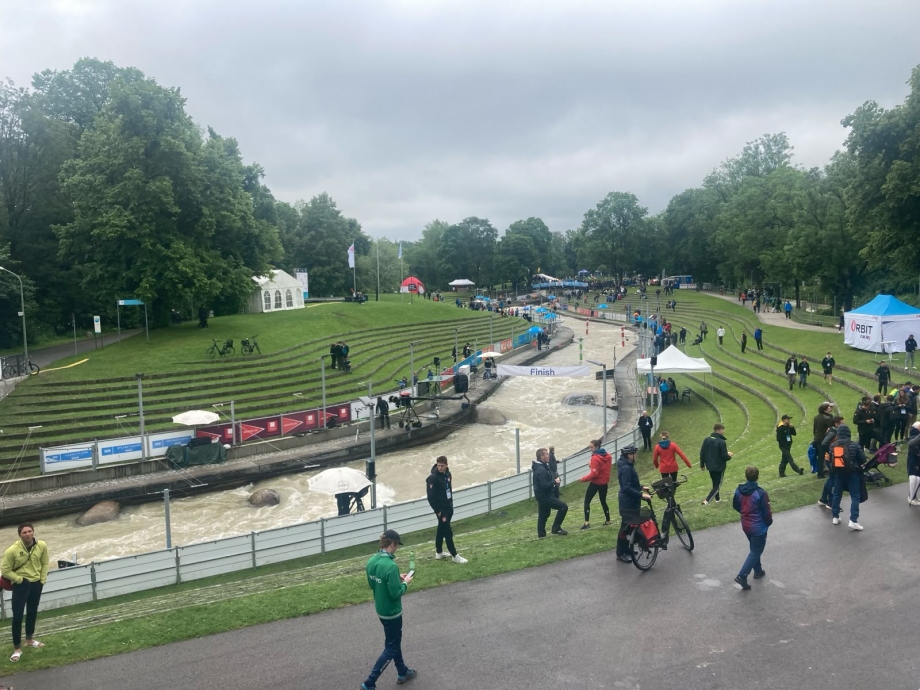
“It’s a classic racecourse, so nothing changes here.”
The course was constructed in 1971, providing the stage for Canoe Slalom to make its Olympic debut in 1972.
Although the venue remains consistent, improvements have been made over the decades to modernise the site and to ensure it adapts to climate change.
“For this venue, the aspect of sustainability is very important,” said Pleitner.
“We’ve been using this venue for over five decades now, essentially since it was originally built.
“We only use natural water, no pumps, no additional energy. It’s simply the natural flow of the water from the river here in Augsburg.
“You really can’t get more sustainable than that.
“We are taking steps to ensure we have enough water, especially with climate change.
“We also want to accommodate more spectators. With the ambition of hosting the Olympic Games here in 2040, some things will need to change. But not the course itself. Never the course.”
With such an extensive history, the waters of the Eiskanal have seen decades, and generations of paddlers come and go.
For some athletes, like Sideris Tasiadis, they are lucky enough to call it home.
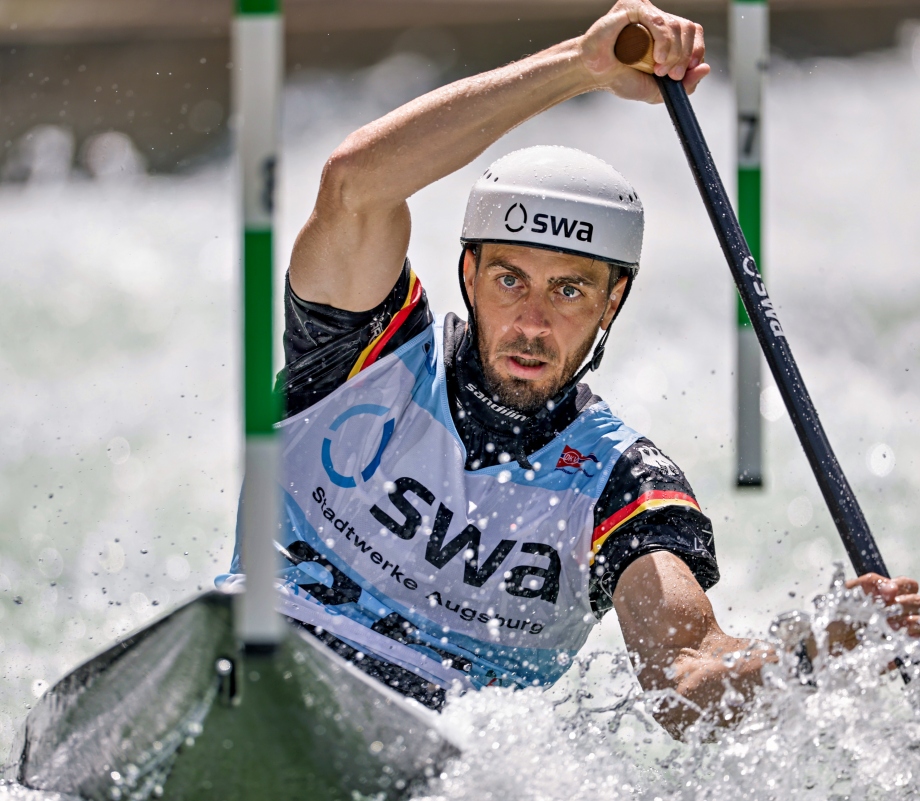
“This venue is incredible. It’s special, I always say this place is like my living room,” laughed Tasiadis, a two-time Olympic medallist in canoe.
“We can train here 365 days a year, you can come any day, any time, and start your training.”
Despite winning an Olympic silver and bronze medal across two Games, medalling at multiple World Championships, and claiming seven World Cup gold medals, the Eiskanal holds some of Tadiadis’ fondest memories.
“I won gold at the World Championships here four years ago in front of a sold-out crowd. It was such a special moment for me,” he said.
Over the years as the Eiskanal has hosted its fair share of events, gaining a reputation across the slalom world as one of the most challenging and exciting stops on the circuit.
It last staged the World Championships in 2022, which was the 50th anniversary of the 1972 Olympic Games, and has held the World Cup a record total of 26 times.
“Here in Augsburg, everybody knows this venue. People, families, community, come and spend time here. It’s really nice,” said Tasiadis.
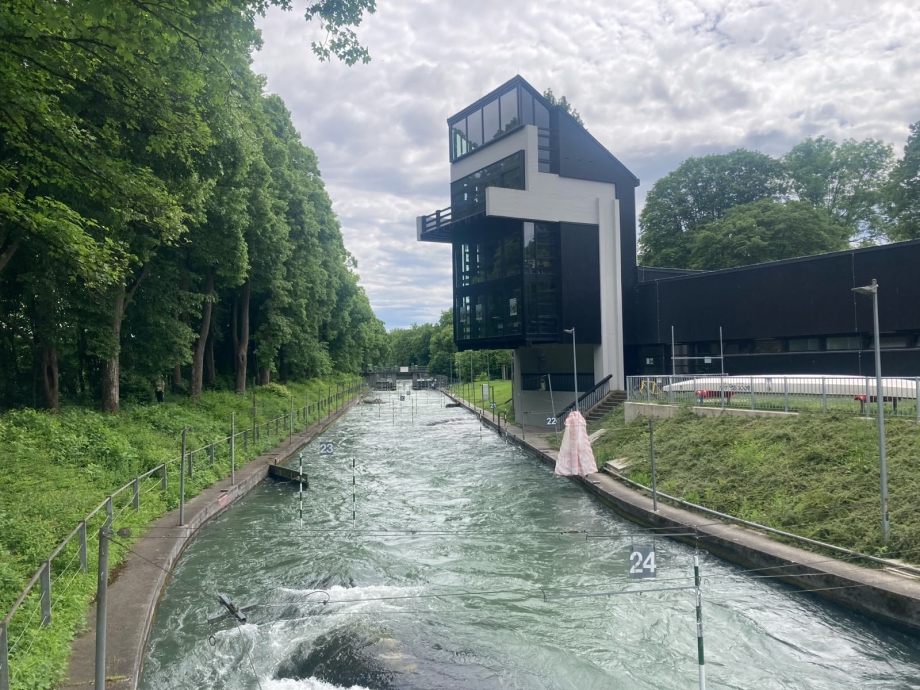
“I have a love-hate relationship with this venue.
“Sometimes you flow perfectly with the water and everything works perfectly, and sometimes the water is so difficult that nothing goes right.”
With the sport truly ingrained into the lives of the 300,000 strong residents of Augsburg, the tradition of the Eiskanal continues to thrive.
“Canoe Slalom really is an Augsburg thing. It’s even included in Augsburg school books, so people grow up knowing about it,” said Pleitner.
“It’s more affordable than football or hockey, so people come here to enjoy themselves. You’re surrounded by nature, by the forest, it’s just a great place to be.”
Related links